Disney World or Universal Orlando: Which Fits Your Trip?
By StayNest Getaways · Research checked October 25, 2026
Choose between Disney World and Universal Orlando by the experiences your group wants, the parks those experiences are in and the time you can give them. Avoid deciding from the shortcut that one resort is “for children” and the other is “for adults.”
If you have only a few full days, one resort may let you build a more focused trip. If your group has clear priorities at both, a mixed itinerary can work—but it needs an admission and transport plan rather than a longer list of logos.
This guide offers a decision framework based on official attraction and ticket information, not a claim that one resort is universally better or cheaper.
First, distinguish resorts from parks
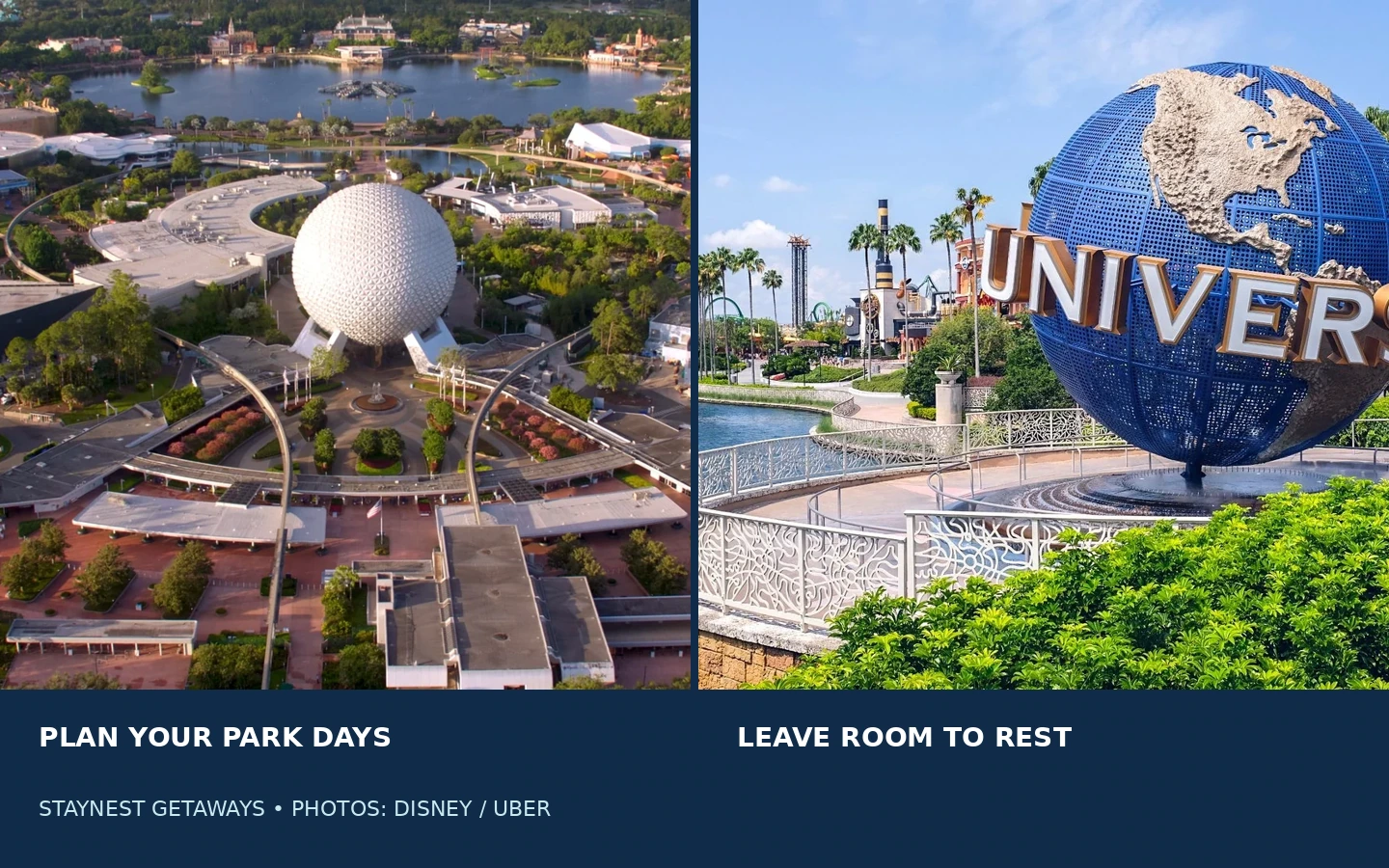
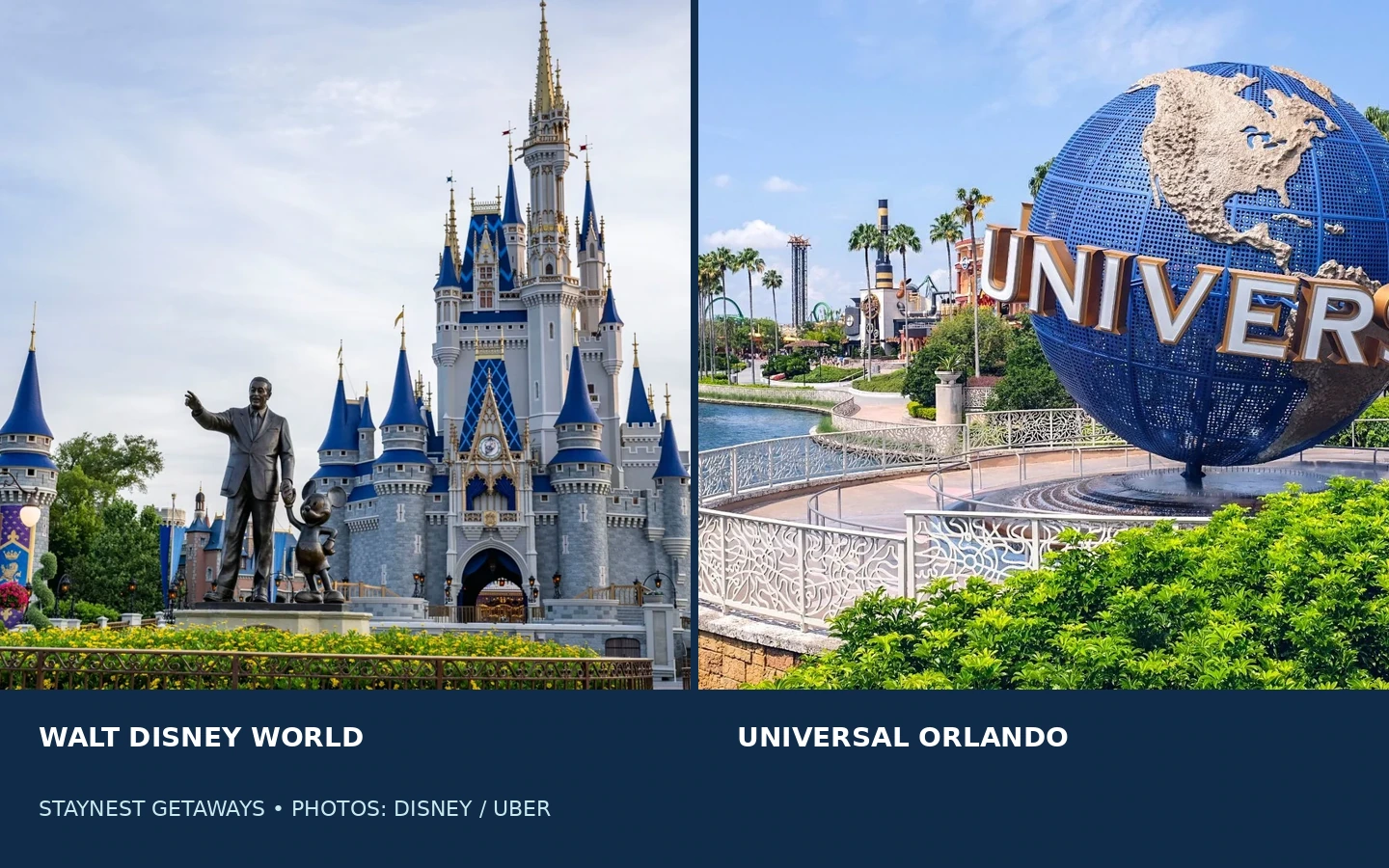
Walt Disney World includes Magic Kingdom, EPCOT, Disney's Hollywood Studios and Disney's Animal Kingdom. Universal Orlando identifies Universal Studios Florida, Islands of Adventure, Epic Universe and Volcano Bay in its resort information. The products and park access you need must be checked separately. [1][2]
Choose experiences first, then map them to parks. A trip motivated by Cinderella Castle is a Magic Kingdom plan. A trip motivated by specific Harry Potter areas needs a more detailed Universal park list. “A Disney ticket” or “a Universal ticket” is not yet a complete purchase specification.
Quick decision matrix
| Your strongest interest | Research first | Important qualification |
|---|---|---|
| Cinderella Castle and classic Disney settings | Magic Kingdom | It is one park within Walt Disney World |
| Star Wars or Toy Story | Disney's Hollywood Studios | Those interests do not automatically require Magic Kingdom |
| Harry Potter experiences | The specific Universal parks containing your priorities | The areas are not all in one park |
| Nintendo-themed experiences | Universal Epic Universe | Check the exact admission product |
| Wildlife-themed experiences and Pandora | Disney's Animal Kingdom | Review individual attractions, not just the broad theme |
| A mix of cultural exploration and attractions | EPCOT | Check what is operating and relevant to your group |
| Roller coasters and higher-intensity rides | Both resorts' actual attraction lists | Height, restraint and comfort requirements matter more than resort stereotypes |
The thematic examples come from the resorts' published park information. [1][2] They are a way to shortlist parks, not a guarantee that every traveler will enjoy every experience in them.
Use a must-do list that everyone can contribute to

Ask each traveler to name two things they would be disappointed to miss. Then label each item with its park, relevant restrictions and whether it requires a separate purchase or booking.
A useful list might read “castle photograph,” “one Star Wars experience” and “Hogwarts Express.” That already identifies several distinct planning decisions. It is more informative than voting for Disney or Universal without discussing what those words mean to each person.
If most priorities fall in one resort, investigate a focused stay there. If they split evenly, compare the added transport and ticket complexity with what you would gain.
Families: assess height and temperament together
Age alone is not a ride plan. Some travelers dislike darkness, loud effects, drops, motion simulation or enclosed spaces even when they meet the minimum height.
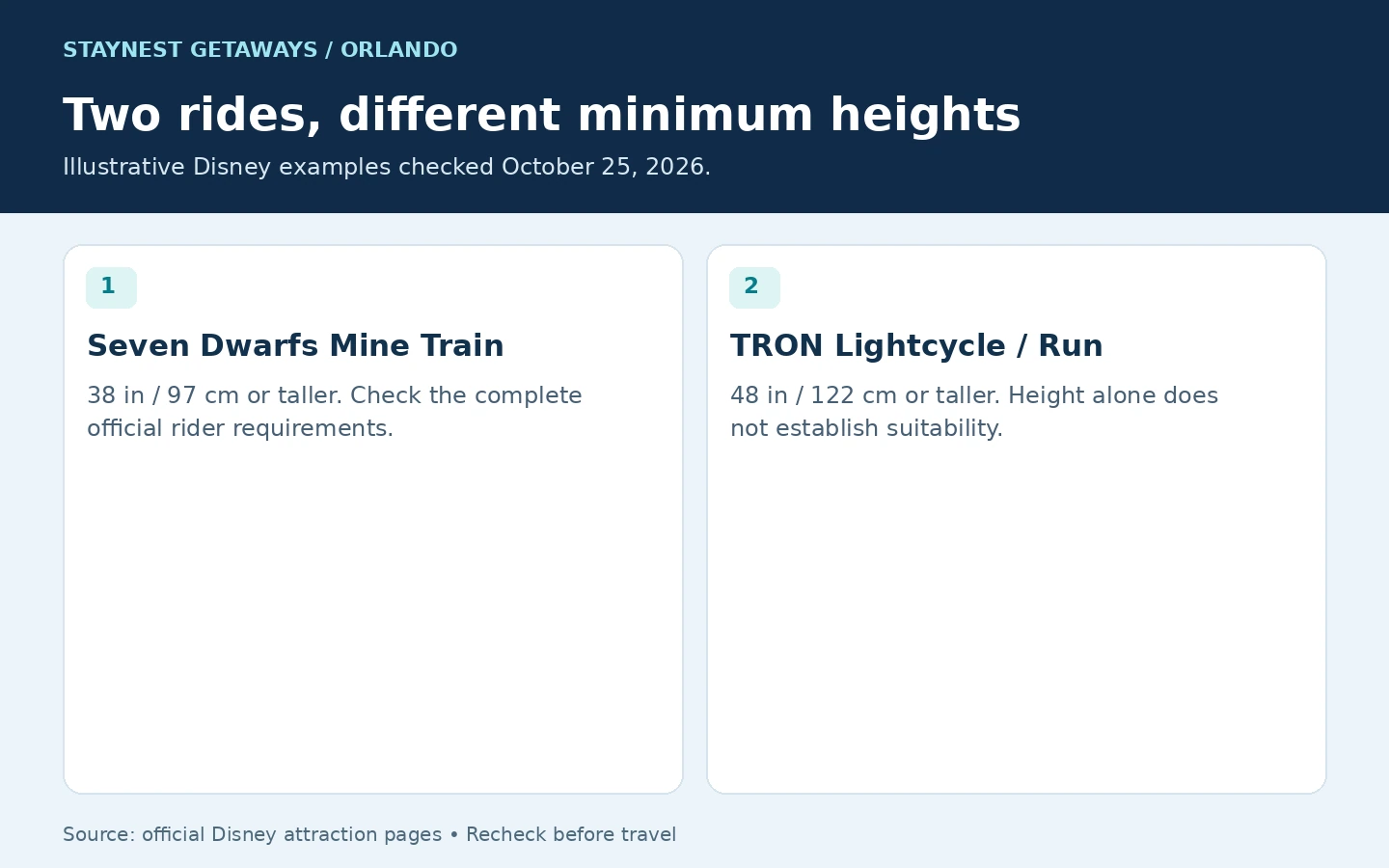
As specific examples, Disney lists Seven Dwarfs Mine Train at 38 inches/97 cm or taller and TRON Lightcycle / Run at 48 inches/122 cm or taller. [3][4] These figures illustrate why two attractions in the same park may suit different members of a family. Recheck the official requirements and all safety guidance before visiting.
Universal publishes its own height requirements and rider-safety information. [5] Consult those for each priority attraction rather than assuming one minimum applies across the resort.
Build alternative activities for anyone who cannot or does not want to ride. A good plan should not leave one traveler repeatedly waiting without an agreed option.
Harry Potter fans: buy for the specific journey

Universal's Hogwarts Express connects the relevant areas in Universal Studios Florida and Islands of Adventure, and the official attraction information specifies a Park-to-Park ticket requirement. [6]
Do not assume a ticket to any one Harry Potter-themed area grants that journey, or that every ticket mentioning Epic Universe includes the same other parks. Read the named product's coverage, valid dates and restrictions before paying.
This is a practical example of why experiences should drive ticket selection. An upgrade is valuable when it enables a priority you actually have, not simply because it sounds more comprehensive.
How much time should you allocate?
For two full days, consider one resort or two deliberately chosen parks rather than attempting an entire destination overview. For three days, compare a focused resort plan with a two-plus-one split. For five full days, a mix with a lower-intensity day becomes easier to organize.
These are editorial pacing recommendations, not minimum time requirements. A traveler interested in only one experience may want less time; a group that likes slower exploration may want more.
Count travel days separately. Also account for the cumulative effort of walking, queuing, early arrivals and late nights. Extra tickets do not remove those demands.
Compare cost without assuming a winner
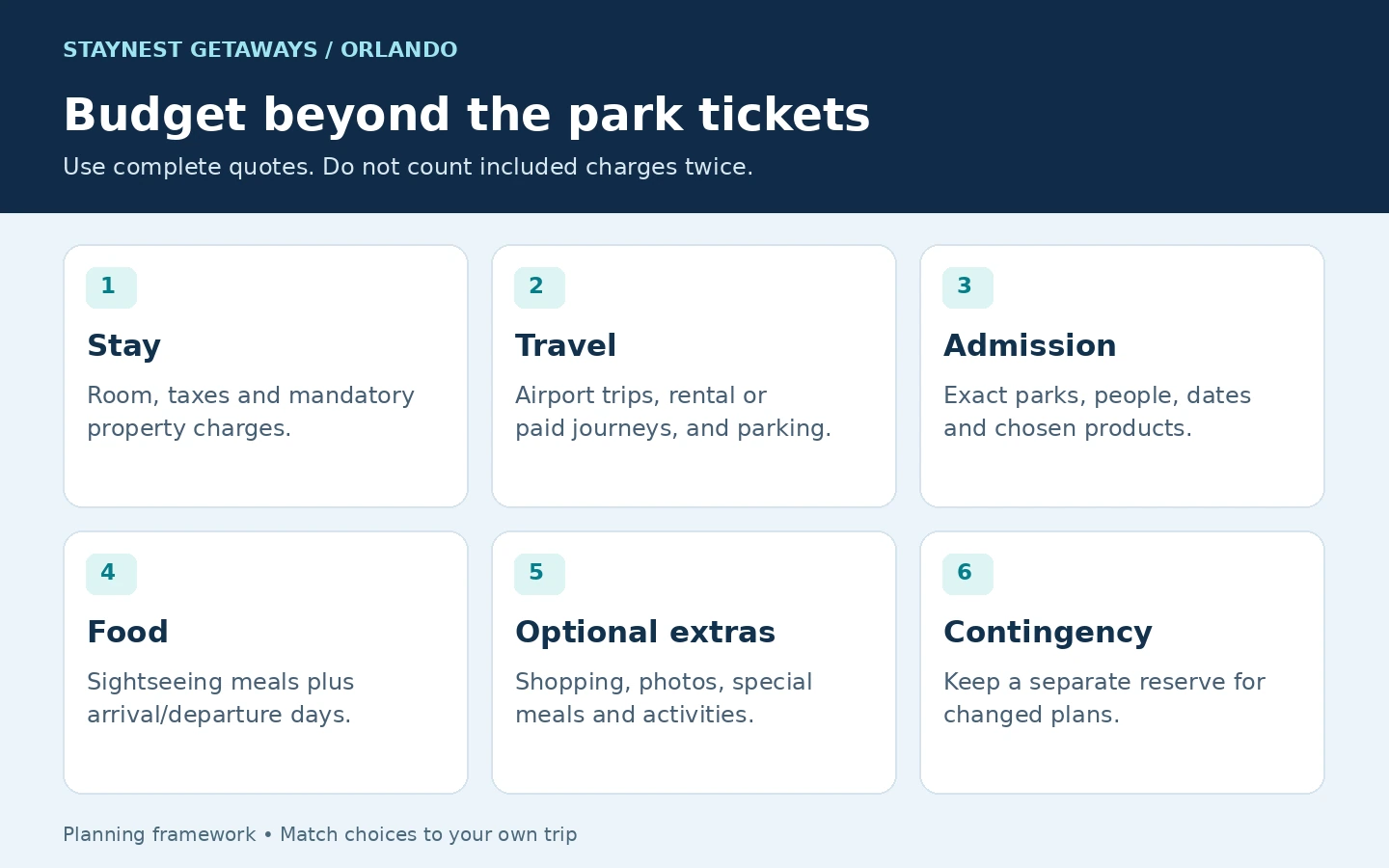
Price the exact parks, dates and admission scope, then add accommodation and transportation. A resort with a lower ticket quote could still lead to a higher full-trip total if the hotel and transport choices differ.
Treat queue-access products and special events as separate decisions. Verify what is actually included in the product rather than assuming all admission or hotel categories carry the same extras.
For a fair comparison, use the same party size, comparable cancellation flexibility and a realistic number of days. Do not compare one resort's single-day ticket with another's multi-day package and call the result a universal price ranking.
Should you stay in one place or split hotels?

A single base keeps packing and check-in simple. A split stay may suit clearly separated Disney and Universal blocks, provided the move is worth its time and expense.
Write the itinerary before changing hotels. Include luggage storage and the transfer itself. If the move consumes a large part of a short holiday, a slightly longer journey on one day may be the better trade-off.
For either resort, read your chosen hotel's transport details. Being “on-site” does not establish identical access to every park.
A simple way to make the decision
Score each shortlisted park against three questions:
- Does it contain something the group genuinely wants?
- Can everyone have a satisfying day there, with alternatives where needed?
- Can the admission, transport and time fit the budget?
If one park scores poorly on all three, remove it. This is a personal planning exercise, not an objective rating system or a claim about park quality.
Frequently asked questions
Which resort is better for adults?
Neither wins automatically. Choose specific themes, attractions, dining and pace that appeal to the adults traveling.
Can we do both resorts in one trip?
Yes, with selected parks and suitable admission. The question is whether the extra journeys and cost improve your particular visit.
Should we buy every available upgrade?
No. Identify the problem an upgrade solves, verify its coverage and compare that value with other uses of the money.
Your next step
Make a park-by-park must-do list, check restrictions and price two versions: a focused stay and a mixed itinerary. Choose the version that protects your group's priorities with fewer unnecessary commitments.
Sources
[1] Disney attractions and parks.
[2] Universal Orlando parks and ticket products.
[5] Universal height requirements.
[6] Hogwarts Express.